
Office Flood Recovery in the First 48 Hours
A wet office carpet can look harmless once the visible puddle is gone. That is where many costly problems start. Effective office flood recovery is not just about getting water off the floor - it is about finding where moisture has travelled, drying affected materials properly and making sensible decisions before mould, odours or damaged flooring interrupt your business.
A burst pipe, overflowing kitchenette sink, roof leak or blocked drain can affect far more than one room. Water can run beneath carpet tiles, soak underlay, wick into plasterboard and settle around skirting boards. In a busy Melbourne office, it can also create slip risks, disrupt staff and put computers, documents and electrical equipment at risk.
The first few hours set the recovery outcome
Fast action matters because carpet, underlay and building materials absorb water at different rates. The longer water remains in place, the further it can move. A quick mop may improve the appearance of the room, but it does not have the extraction power to remove water held deep in carpet fibres or beneath the surface.
If it is safe to do so, stop the source of water first. Turn off the local supply for a plumbing leak, move furniture and portable equipment clear of the wet area, and keep people away from affected power points or electrical leads. If water is near electrical systems, contact a qualified electrician before anyone re-enters or begins cleaning.
For a clean-water incident, such as a fresh supply line leak, the immediate priorities are straightforward:
Photograph the affected areas, furniture and equipment for records or insurance.
Remove loose items and lift furniture where practical, using protective blocks under legs if needed.
Arrange professional water extraction rather than relying on fans alone.
Start controlled drying and moisture monitoring as soon as possible.
Not every flood is clean water. Water from toilets, drains, sewage backups or outside stormwater may contain contaminants. In those cases, staff should avoid contact with the water and affected porous materials may need more careful disposal or specialist treatment. Trying to save every item is not always the safest or most cost-effective option.
Why office flood recovery needs more than a wet vacuum
Office carpet often has a commercial backing, joins, carpet tiles, underlay or a concrete slab underneath. Each reacts differently once wet. Carpet tiles can sometimes be lifted, dried and reinstated if dealt with promptly. Broadloom carpet may hold water in its backing and underlay. Concrete can retain moisture even after the carpet feels dry underfoot.
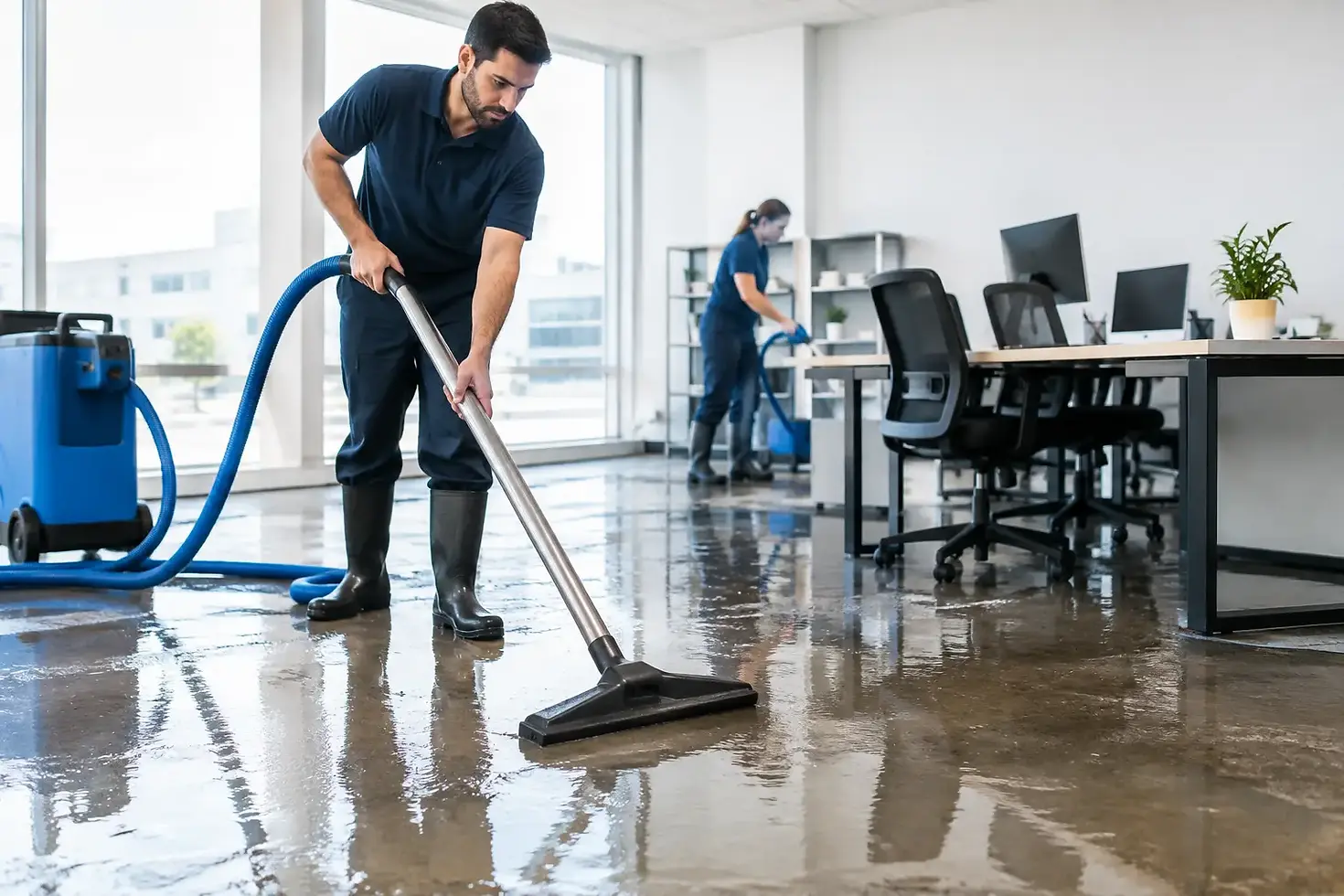
Professional extraction equipment uses strong vacuum power to pull out far more water than a domestic wet vacuum or rental machine. This reduces drying time and limits the chance of water spreading further through the property. Hot water extraction can also be useful during the cleaning stage where appropriate, but in a flood situation the first job is usually removal of bulk water and assessment of what has been affected.
The key difference is not just having a machine on site. It is knowing what needs drying, what can be cleaned, and what needs to be removed. A technician should inspect the visible wet area as well as the surrounding carpet, skirting, walls and adjoining rooms. Water does not always stop where the stain or puddle stops.
Moisture detection prevents hidden damage
Thermal imaging and moisture detection equipment help identify cold or wet areas that cannot be judged by touch alone. This is particularly useful around internal walls, under workstations and near kitchenettes, where water may have travelled out of sight.
A carpet can feel dry on top while the backing, underlay or slab remains damp. Replacing furniture too early can trap moisture, leave marks on carpet and slow the drying process. Moisture readings provide a more reliable basis for deciding when an area can return to normal use.
Drying an office without creating more disruption
After extraction, drying equipment is placed to move air across wet surfaces and remove moisture from the air. Powerful air movers increase evaporation, while dehumidifiers collect that moisture before it settles elsewhere in the building. The exact setup depends on the size of the affected area, the source of water, ventilation, weather conditions and the materials involved.
Opening windows is not always the answer. Melbourne weather can be damp, and bringing humid outside air into an office may slow drying rather than help it. Similarly, running ordinary pedestal fans can move air, but without proper dehumidification and moisture checks they may not solve the underlying problem.
A good drying plan also considers how the workplace will operate. Some offices can isolate one meeting room and continue working. Others need a staged approach around reception areas, shared desks or customer-facing spaces. Equipment does make noise, so timing matters. Where possible, drying can be scheduled around quieter business hours to reduce disruption.
Protect carpets, furniture and indoor air quality
Water-damaged office carpet can develop a musty smell within days if it is not dried thoroughly. That smell is not something to cover with deodoriser. It is a sign that moisture or contamination needs attention.
Once the area has been extracted and assessed, professional cleaning may be recommended to remove soil carried in by the water and freshen the carpet fibres. Antibacterial deodorising can be appropriate after clean-water incidents where materials are salvageable. The treatment should suit the carpet type and the water category, rather than being used as a one-size-fits-all fix.
Upholstered office chairs, fabric partitions and soft furnishings also need checking. Their padding can hold water for longer than their surface suggests. A chair that looks fine after a leak may still have damp foam underneath, creating odour and hygiene issues later.
Paper records, cardboard storage boxes and untreated timber are less forgiving. Lift them off wet flooring quickly, separate what can be air-dried and document damage before disposal. For IT equipment, do not switch it on to test whether it works. Isolate it, record the damage and have it assessed by the relevant technician or insurer.
When carpet can be saved and when it cannot
There is no honest answer that applies to every flooded office. The outcome depends on the source of the water, how long materials were wet, the type of flooring and whether contamination is present.
Carpet affected by a clean supply-water leak and treated quickly may often be saved through strong extraction, controlled drying and cleaning. Carpet exposed to sewage, greywater or significant stormwater contamination is a different situation. Porous materials such as underlay, carpet backing and plasterboard may be unsafe or impractical to restore completely.
Trying to keep contaminated materials simply to avoid replacement costs can create a larger problem for staff, tenants and property owners. A clear assessment early on helps avoid spending money on cleaning that will not provide a hygienic result.
Choosing a professional office flood recovery service
The right provider should explain what they have found, what equipment they are using and why. Be wary of anyone who promises to dry an office without inspecting surrounding materials, or who quotes a flat price without understanding the size and condition of the affected area.
Ask whether they use commercial-grade extraction equipment, moisture meters, thermal imaging, air movers and dehumidifiers. It is also reasonable to ask how often moisture levels will be checked and whether they can provide clear records for your property manager or insurer. Transparent pricing matters most during an urgent call-out, when it is easy for vague extras to appear later.
Urban Steam Clean supports Melbourne workplaces with water extraction, moisture detection, targeted drying and carpet cleaning where restoration is appropriate. The aim is practical: remove as much water as possible, dry the right materials properly and help the office reopen with fewer lingering surprises.
Before staff return to the affected area
Do not rely on appearance alone. Confirm that flooring and affected building materials have reached acceptable moisture levels, electrical concerns have been cleared, and any contaminated materials have been handled appropriately. Remove drying equipment only when the area is genuinely dry, not merely less wet than it was yesterday.
A flood can be stressful, especially when it lands in the middle of a working day. Prompt extraction, honest assessment and proper drying give your office the best chance of avoiding mould, odours and repeat disruption - and let your team get back to work with confidence.


Comments